More information
WHAT IS DEMENTIA, ANYWAY?
Dementia is a serious decline or even loss of cognitive functions. When we hear the word dementia, we all naturally first think of a decrease in memory. However, dementia is much more than just a disorder or even memory loss, and we know different forms. And at this point we need to explain what Alzheimer’s disease is. According to the World Health Organization, Alzheimer’s disease is the most common cause of dementia, contributing to up to 70 percent of dementia cases. Approximately 24 million people are affected worldwide, and this number is expected to double every 20 years. From today on, we will forever remember that the most common form of dementia is called Alzheimer’s disease and represents the most extensive form of all dementias. So, for the sake of our challenge – we are addressing the entire group – dementia.
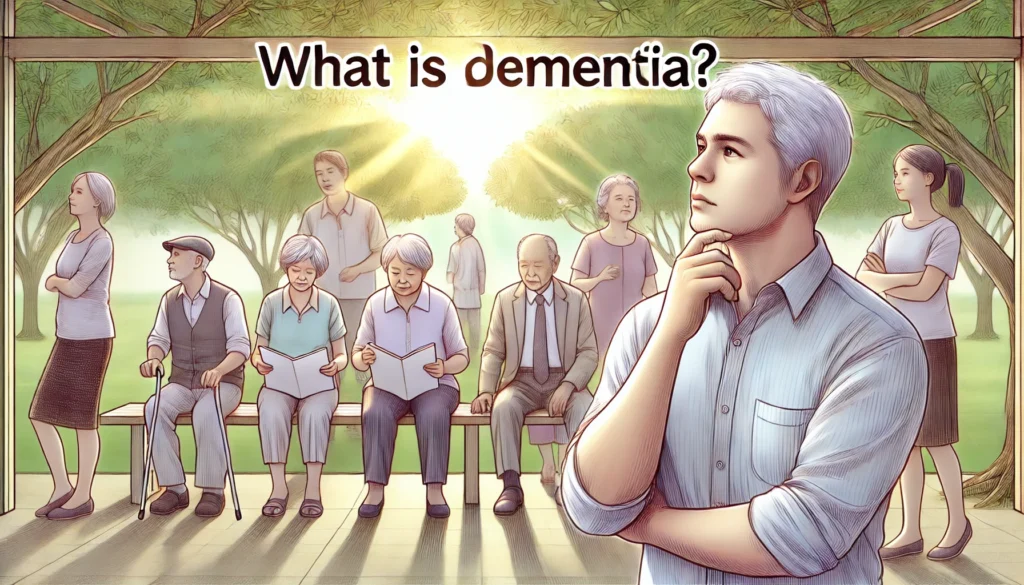
The disease that causes so-called dementia can, like a computer virus, impair our cognitive functions (memory, understanding, speech, orientation and judgment) to the point that it interferes with everyday life. All of us who have ever encountered this disease or even have someone in our close relatives know that dementia can also be accompanied by various other personality and behavioral disorders. We are talking about behavioral changes, decreased motivation, personality changes. .. there is a lot of it.
And that is why we are here today. To address this disease and help either people with dementia or their caregivers. Or – why not – both at the same time.
The 3 challenges we will tackle during both days of the Roche hackathon are:
1. Support for care recipients
You can approach the challenge from the perspective of timely detection of dementia or addressing relief, assistance, … in this challenge, the person with dementia is definitely at the forefront.
Dementia begins much earlier, before it is recognized and diagnosed. With attention deficit disorder, reduced concentration, insomnia. The person loses interest in their surroundings and the things they used to love. Over time, they become withdrawn, forgetful, and often sad. Because of all these signs, in the early stages, the condition is often attributed to other reasons or illnesses. However, when a person begins, for example, to forget to the extent that it interferes with everyday life, they forget that they are forgetting, they constantly repeat themselves, and when we remind them that they are forgetting, they become irritable, angry, and distrustful – these are already direct signs of dementia. What you need to know at this point is that even with such signs, making a diagnosis is not easy. Often, even an expert, a psychiatrist, a neurologist, a clinical psychologist, etc., cannot easily distinguish between the disease and what is supposed to be “normal” forgetfulness.
With all that said – what solutions come to mind? How can we help people with dementia to recognize the signs in themselves at an early stage? Can we make it easier, measure it differently, raise awareness and reduce stigma,… the field of possibilities is wide. It depends on each team what you will focus on. Just keep in mind that in challenge 1, your focus is on finding solutions for a person with dementia.
Useful data for you to use:
- Dementias Platform UK
- Asset Map
- Global Dementia Observatory (GDO)
- WHO GHO OData API
- WHO Athena API
- European prevention of Alzheimers dementia consortium
- EPAD data
- https://datacube.roadmap-alzheimer.org/data.php#
- Alzheimer’s Disease Data Initiative (ADDI)
- Prevalence of dementia in Europe
- https://www.
dementiastatistics.org/ statistics-about-dementia/ - https://www.oecd.org/sti/inno/
dementia-resources.htm - http://www.
humanconnectomeproject.org/ data/ - https://adni.loni.usc.edu/
data-samples/access-data/ - https://naccdata.org
- https://podatki.nijz.si/pxweb/
sl/NIJZ%20podatkovni%20portal/ search/?searchquery=Demenca - https://podatki.gov.si/data/
search?s=5+Število+ hospitalizacij+zaradi+bolezni% 2C+po+glavnih+diagnozah+% 28MKB-10%2C+trimestna+koda%29+ in+spolu%2C+Slovenija%2C+letno - https://podatki.gov.si/data/
search?s=Število+SPP+primerov+ po+glavni+diagnozi+in+spolu% 2C+Slovenija
2. Support for caregivers
The progression of dementia increasingly burdens the person or persons who care for them. Imagine everything described in challenge 1 and project it onto the life of a caregiver? You are dealing with someone who is forgetful, has difficulty with orientation, is afraid, may be depressed, unmotivated, angry, sometimes aggressive, repetitive,… and over time forgets even their basic life functions. It is also important to note that dementia is still somehow surrounded by prejudice and stigmatization of patients. How to help someone who lives with dementia day after day and is simply tired of caring? Living with a person with dementia is anything but easy. That is why it even leads many to burnout. How to make their work, their lives easier?
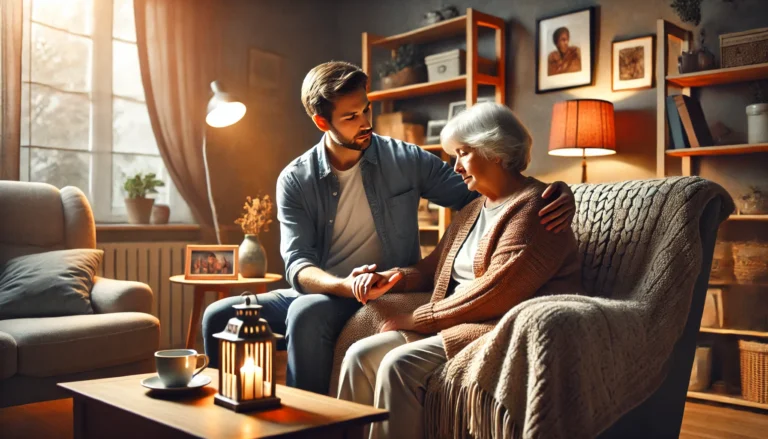
Caregivers are also professional healthcare personnel, employees in nursing homes,… everyone who cares for patients with dementia. Your solution can address any of the teams listed, or all of them in one. It is important to show that you have researched the problem and created a solution where the caregiver is at the forefront and your solution brings them some form of relief. Work, procedures, time management, …. Anything, as long as the caregiver is at the center.
Useful data for you to use:
- Dementias Platform UK
- Asset Map
- Global Dementia Observatory (GDO)
- WHO GHO OData API
- WHO Athena API
- European prevention of Alzheimers dementia consortium
- EPAD data
- https://datacube.roadmap-alzheimer.org/data.php#
- Alzheimer’s Disease Data Initiative (ADDI)
- Prevalence of dementia in Europe
- https://ep-ad.org/open-access-
data/overview/ - https://www.oecd.org/sti/inno/
dementia-resources.htm - http://www.
humanconnectomeproject.org/ data/ - https://adni.loni.usc.edu/
data-samples/access-data/ - https://naccdata.org
- https://podatki.nijz.si/pxweb/
sl/NIJZ%20podatkovni%20portal/ search/?searchquery=Demenca - https://podatki.gov.si/data/
search?s=5+Število+ hospitalizacij+zaradi+bolezni% 2C+po+glavnih+diagnozah+% 28MKB-10%2C+trimestna+koda%29+ in+spolu%2C+Slovenija%2C+letno - https://podatki.gov.si/data/
search?s=Število+SPP+primerov+ po+glavni+diagnozi+in+spolu% 2C+Slovenija
3. Dementia-friendly municipality
In this challenge, we care about the wider environment. What should a dementia-friendly municipality look like? How does it help people with dementia and their caregivers? Can we do something to increase understanding, awareness and activation of other citizens? Can we do something with lifelong learning, a healthy lifestyle? Imagine that you are in the position of a caregiver or a person with dementia and think about how they can find their way around their physical place more easily. Not just at home or in an institution. Dementia-friendly points already exist – build on this and build on it. The City Municipality of Kranj will be happy to test your solutions. At the hackathon, you will have time to walk around the city and see for yourself what is and what could still be. Keep in mind the overall quality of life – people with dementia, caregivers and fellow citizens, so that together we can create a community where no one feels or remains … forgotten / lost.
Useful data for you to use:
- Dementias Platform UK
- Asset Map
- Global Dementia Observatory (GDO)
- WHO GHO OData API
- WHO Athena API
- European prevention of Alzheimers dementia consortium
- EPAD data
- https://datacube.roadmap-alzheimer.org/data.php#
- Alzheimer’s Disease Data Initiative (ADDI)
- Prevalence of dementia in Europe
ORGANIZERS & PARTNERS

Roche, headquartered in Basel, Switzerland, has been making a significant contribution to global health for 126 years.
Still majority-owned by the family, we combine pharmaceuticals and diagnostics, as well as digital and data solutions under one roof, which means we cover the entire patient journey. Innovation and science are our DNA.
We bring personalized innovations in the fields of oncology, immunology, neurology, blood diseases, virology, tissue diagnostics, diabetes and women’s health.
Our goal is to enable personalized treatment that can significantly improve the quality of life and survival of patients.
In 2021, the Roche Group employed around 100,000 people worldwide and invested 13.2 billion euros in research and development. We employ just over 80 experts in Slovenia. They are involved in international cooperation processes in their work, thus connecting Slovenia with the world in business and expertise.
For more information, visit roche.si

The Government Office of the Republic of Slovenia for Digital Transformation monitors and analyses the state of digital transformation and the information society at the national level. In cooperation with the competent ministries and government departments, it prepares, coordinates and implements state measures and projects in the field of information society and digital transformation of the economy, public administration, healthcare, justice, agriculture and education and other areas. It coordinates, determines and monitors the activities of ministries, government departments and other bodies and services in the field of digital transformation and the information society.
Practical Solutions That Help Humanity – Oracle is committed to developing practices and products that help transform the future of healthcare.
Oracle is committed to helping businesses discover and better understand healthcare technology. Oracle is proud to be part of this mission and contribute to the innovative journey of “Dementia – Our Common Challenge” through the hackathon, seeing it as a
great opportunity to raise awareness about this extremely important topic.
Kranj, the largest city in Gorenjska, was founded at the confluence of the Kokra and Sava rivers. It is an important industrial and economic center of Gorenjska and at the same time a pleasant, old city with a rich history.
The Municipality of Kranj strives for innovation, introducing changes and improvements in all segments of its operations, with the goal of creating new jobs and economic progress in Kranj. At the same time, the city administration wants to provide its residents with a high-quality and healthy natural and social environment.
Spominčica – Alzheimer Slovenia – Slovenian Association for Dementia Support is an independent, non-profit, interdisciplinary professional association, whose primary purpose and goal is to provide professional and effective assistance to people with dementia, their relatives and caregivers.
Spominčica informs the general public about its work by publishing articles in professional, periodical or daily press and via social networks. It may invite journalists to meetings and organize press conferences and round tables. The president of Spominčica is responsible for the transparency of the association’s operations.

At the Ministry of Public Administration, we perform tasks in the field of systemic regulation of the organization and operation of the public sector, the civil service and salary system in the public sector, and administrative operations. In cooperation with other departments, we strive to eliminate administrative obstacles and improve the quality of public administration. At the systemic level, we are responsible for the field of public procurement, the operation of non-governmental organizations and local self-government. Our work also includes the systemic regulation of electoral and referendum legislation, and transparency and integrity in the public sector. We ensure the operation of the national communication network and support for the development of electronic services for citizens, the economy, and the state. As a ministry responsible for the systemic regulation of the management of the tangible assets of the state and local communities, we strive for efficient and economical management of the tangible assets of the state.
The National Open Data Portal of Slovenia – OPSI has a dual role:
it represents a central catalogue of databases in the country, i.e. a list of databases maintained by state authorities, municipalities and other public sector bodies, and
it represents a single website for publishing data from databases in open and machine-readable formats.
The OPSI portal guarantees the right to free and easy reuse of freely accessible data published as “open data”, for any (non-profit or profit) purpose.