Spinal Muscular Atrophy (SMA) is a rare genetic disorder that affects the central and peripheral nervous systems and leads to progressive loss of muscle control. It is caused by mutations in the SMN1 gene, which prevent the body from producing enough survival motor neuron (SMN) protein—essential for maintaining motor neurons in the spinal cord. Without this protein, nerve cells lose their ability to communicate with muscles, leading to muscle weakness and atrophy. SMA mainly impacts muscles closer to the body’s center such as the shoulders, hips, and back, while mental and sensory functions remain unaffected. The condition is classified into several types (1 through 4), depending on the age of onset and severity of symptoms, ranging from severe infant forms to milder adult-onset types.
Progression and Advances in Treatment
The progression of SMA varies widely; generally, the earlier the symptoms appear, the more severe the disease course. In the past, SMA was considered the leading genetic cause of infant mortality, but recent medical advances are transforming outcomes. The primary symptom of chromosome 5-related (SMN-related) SMA is weakness of the voluntary muscles. The muscles most affected are those closest to the center of the body, such as those of the shoulders, hips, thighs, and upper back. The lower limbs seem to be affected more than the upper limbs, and deep tendon reflexes are decreased.
Special complications occur if the muscles used for breathing and swallowing are affected, resulting in abnormalities in these functions. If the muscles of the back weaken, spinal curvatures can develop. New gene therapies and treatments that boost SMN protein production have changed the outlook for people living with SMA, allowing many to lead longer, more active lives. Ongoing research continues to focus on improving motor neuron survival, enhancing mobility, and supporting better quality of life for patients and families affected by the condition.
Useful and available information
CURE SMA
More about disease from MDA
National representative disability organization
Multimodal mobility policy proposal SLO
European Allience of Neuromuscular Disorders Assosiations
Info about the condition
Famous people coping with MS
Selma Blair
Anda Marić
Jack Osbourne
Barbara Pešut
Christina Applegate
Interesting products and projects
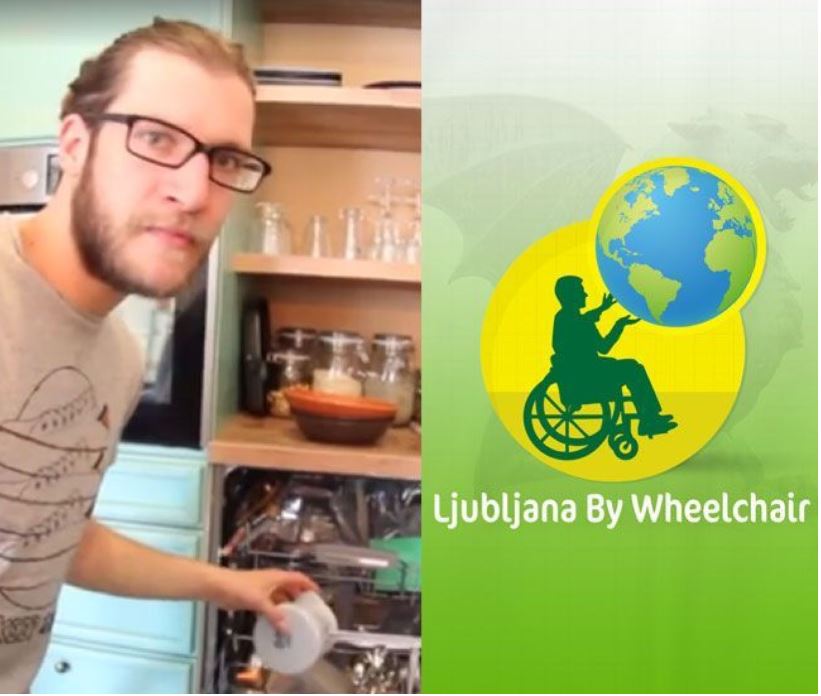
Ljubljana by wheelchair
App, covering the needs of wheelchair user tourists. App is user friendly, easy to use, and enables a simple search of relevant touristic information about Ljubljana for a wheelchair user.
New prototypes for MS patients
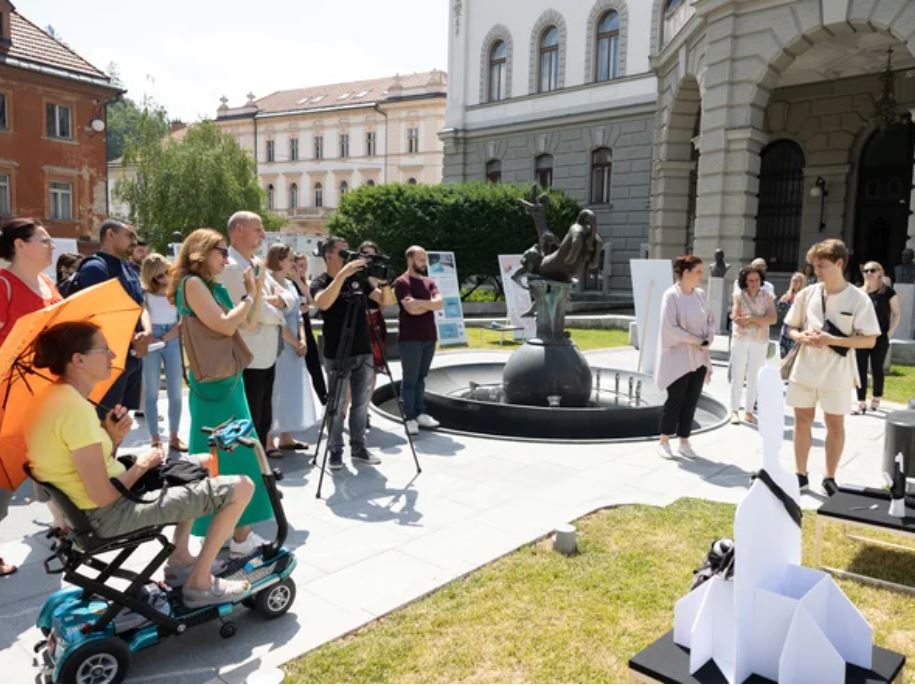
Eutopia2050 Open Innovation Challenge project entitled Designing Solutions for Multiple Sclerosis Patients , students from the University of Ljubljana have developed various practical aids to make life easier for those with the condition.
Multimodal mobility
The main goal of the project is to improve the mobility of the blind and partially sighted, the physically challenged, the elderly and school-age children, who are among the more vulnerable traffic participants.
HOW TO PARTICIPATE?
SIGN UP Register your team or sign up as an individual, and we will help you find the right team.
CHOOSE A CHALLENGE Select the challenge that interests you the most and prepare to create exceptional solutions.
CREATE A SOLUTION Use your creativity and knowledge to develop innovative solutions.
PRESENT YOUR SOLUTION Present your solution to the expert jury at the event and compete for prestigious awards.
Stories
ORGANIZERS & PARTNERS
Roche, headquartered in the Swiss city of Basel, has been making significant contributions to global health for 126 years.
Still majority family-owned, under one roof we integrate pharmaceuticals, diagnostics, as well as digital and data solutions, encompassing the entire patient journey. Our DNA is rooted in innovation and science.
We deliver personalized innovations in oncology, immunology, neurology, hematology, virology, tissue diagnostics, diabetes, and women’s health.
Our goal is to enable personalized healthcare solutions that can significantly improve patients’ quality of life and survival.
In 2021, the Roche Group employed around 100,000 people worldwide and invested €13.2 billion in research and development. In Slovenia, we employ just over 80 professionals who actively engage in international collaboration, thereby connecting Slovenia’s business and expertise with the world.
For more information, visit roche.si.
Društvo distrofikov Slovenije is the representative association for people in Slovenia affected by muscular and neuromuscular diseases. The organization provides support through social programs, rehabilitation, personal assistance, accessible transportation, and advocacy to help members live more independently and fully.
They also own an allied enterprise, Birografika BORI, offering graphic design and printing services in a way that supports and integrates persons with disabilities into economic activity.
UL FKKT (Faculty of Chemistry and Chemical Technology, University of Ljubljana )
UL FKKT is a leading faculty that generates fundamental and applied knowledge in chemistry and chemical technology, which is crucial for developing new innovative therapies and solutions in medicine. As a collaborating partner in research and education, the faculty provides highly skilled personnel and scientific excellence, supporting breakthroughs and digitalization within the health and medicine sector.
Slovenian Innovation Hub (SIH) is building an eco-system of co-creation and adoption of innovative products and services within the healthcare system. We are a national coordinator of Strategic Research Innovation Partnership (SRIP) Health Medicine, which is one of the key strategic priorities of Slovenian Smart Specialisation Strategy by connecting key stakeholders from the quadruple helix (sciences, public sector, government and businesses). SIH is a partner in the EU projects HealthChain I3, GeneH, IFIGENEIA, enabling creation and acceleration of knowledge transfer and best-practice sharing across European regions.
The project Multimodal Mobility of people with various disabilities has been running for the tenth year and is funded by the Ministry of the Environment, Climate and Energy. It is implemented by the Geodetic Institute of Slovenia, and the project manager is mag. Roman Rener. The main goal of the project is to improve the quality of life of people with various disabilities and the elderly in the field of mobility and accessibility. With the project, we are establishing a single national data layer on the mobility of vulnerable groups and thereby raising awareness of numerous still unresolved challenges, both in the field of physical and information and communication accessibility.
The key result of the project is a public viewer, designed as a web-based GIS tool, which allows municipalities, organizations, companies and citizens to effectively view spatial data on the mobility and accessibility of vulnerable people in various Slovenian cities. The viewer is free of charge and is intended for viewing, visualizing and transferring collected data, which can serve as a basis for the development of new technological solutions or for preliminary route planning.
Our vision is to become a key Slovenian connector in providing an environment (knowledge and technology) that will enable the accelerated use of spatial information in decision-making for various groups of users (natural persons, public and private sectors). The Geodetic Institute of Slovenia plays a connecting role between the academic, administrative, implementing and user spheres in the field of geodesy and geoinformatics, both at home and abroad. In accordance with the work program of the Geodetic Institute of Slovenia, which is an integral part of the annual program of the State Geodetic Service, over forty employees carry out the following tasks according to the principles of project management:
Empowering individuals to form highly effective and motivated teams. We are changing the mindset of traditional business. This is about HUMAN transformation in the DIGITAL ERA.
Digital transformation is NOT about technology… it’s about STRATEGY, LEADERSHIP, new ways of THINKING, and continuous INNOVATION. It’s about PEOPLE!
And that is the essence of Transformation Lighthouse.